[pandas] One-hot encoding list elements in pandas columnsDec. 30, 2023
Explains how to one-hot encode list values stored in a pandas column using scikit-learn's MultiLabelBinarizer and merge the result back into the original DataFrame.
Explains how to one-hot encode list values stored in a pandas column using scikit-learn's MultiLabelBinarizer and merge the result back into the original DataFrame.
Explains how to expand equal-length lists stored in a pandas column into separate columns using apply with pd.Series, combined with pop and join.
Explains how to fill missing dates in time series sales data using pandas' date_range and reindex to generate a complete, evenly spaced date index.
Investigates why pandas' Series.std() and numpy's np.std() give different results by default, tracing it to their different default degrees of freedom (ddof).
Shows how to combine pandas' groupby with filter and a lambda to keep only the groups that satisfy a given condition, such as a minimum count.

Uses SymPy to symbolically derive the binomial-to-Poisson distribution limit and perform maximum likelihood estimation with Fisher information for the normal distribution.

Introduces the basics of SymPy, covering symbolic expansion, factorization, equation solving, differentiation, integration, and matrix operations with simple examples.
Explains SQL's GROUP_CONCAT function using a posts-and-tags example, showing how to concatenate grouped row values into a single comma-separated string.
Explains how NULL behaves in SQL calculations and how to use the COALESCE function to supply default values, using a products table example.
Explains when to use SQL's EXISTS versus IN using a customers and orders example, covering differences in NULL handling and query performance.
Explains the difference between SQL's UNION and UNION ALL by combining two class roster tables, showing how duplicate removal affects results and performance.
Explains the difference between SQL's WHERE and HAVING clauses using an order aggregation example, clarifying when to filter before versus after aggregation.
Explains SQL self joins using an employee-manager hierarchy example, showing how to join a table with itself using aliases to look up related rows.
Explains how to use SQL's CASE expression to assign grades based on scores and combine it with aggregate functions to build conditional cross-tabulation queries.
Explains SQL Common Table Expressions (CTEs) by comparing a subquery-based query with a CTE-based rewrite to show improved readability and reusability.

Explains the differences between SQL window functions RANK, DENSE_RANK, and ROW_NUMBER for ranking data with tied scores, using a sample student scores table.
Explains how to set up a Python environment for running SQL using SQLite and Polars, then covers creating tables and basic SELECT, WHERE, and ORDER BY queries.
Explains how to invert 1D and 2D tensors in PyTorch using torch.flip and torch.fliplr, comparing them with NumPy's slice-based array reversal with code examples.
Demonstrates how to unpack list and dictionary arguments using * and ** to pass multiple values to a function at once in Python.
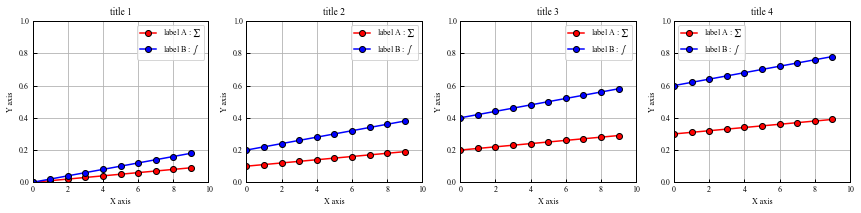
Provides a personal matplotlib template for drawing publication-quality graphs, covering font and tick styling and laying out multiple subplots side by side.
Shows why np.mean and np.std return nan for arrays with NaN values, and how np.nanmean and np.nanstd compute the mean and standard deviation while ignoring them.
Shows how to use matplotlib-venn's venn2 and venn3 functions to create Venn diagrams that visualize overlaps between two or three datasets during EDA.
Explains a pandas pitfall where adding a Series column after dropna misaligns on the old index and introduces NaN values, and shows how reset_index fixes it.
Investigates why a Jupyter notebook kernel fails to load the intended conda environment and shows how to inspect kernel configuration files to find the cause.
Compares two ways to extract groupby results in pandas and shows that iterating directly over the groupby object is significantly faster than filtering by each unique value.
Explores how Python's garbage collection and reference counting work, using sys.getrefcount to observe how counts change as references are created and removed.
Provides a reusable LightGBM regression template covering data loading, model training, cross validation, test set evaluation, and feature analysis with SHAP.
Explains why installing dlib via Homebrew upgrades OpenSSL to 1.1.1 and breaks gem/require with a 'Library not loaded: libssl.1.0.0.dylib' error, and how reinstalling Ruby via rbenv fixes it.
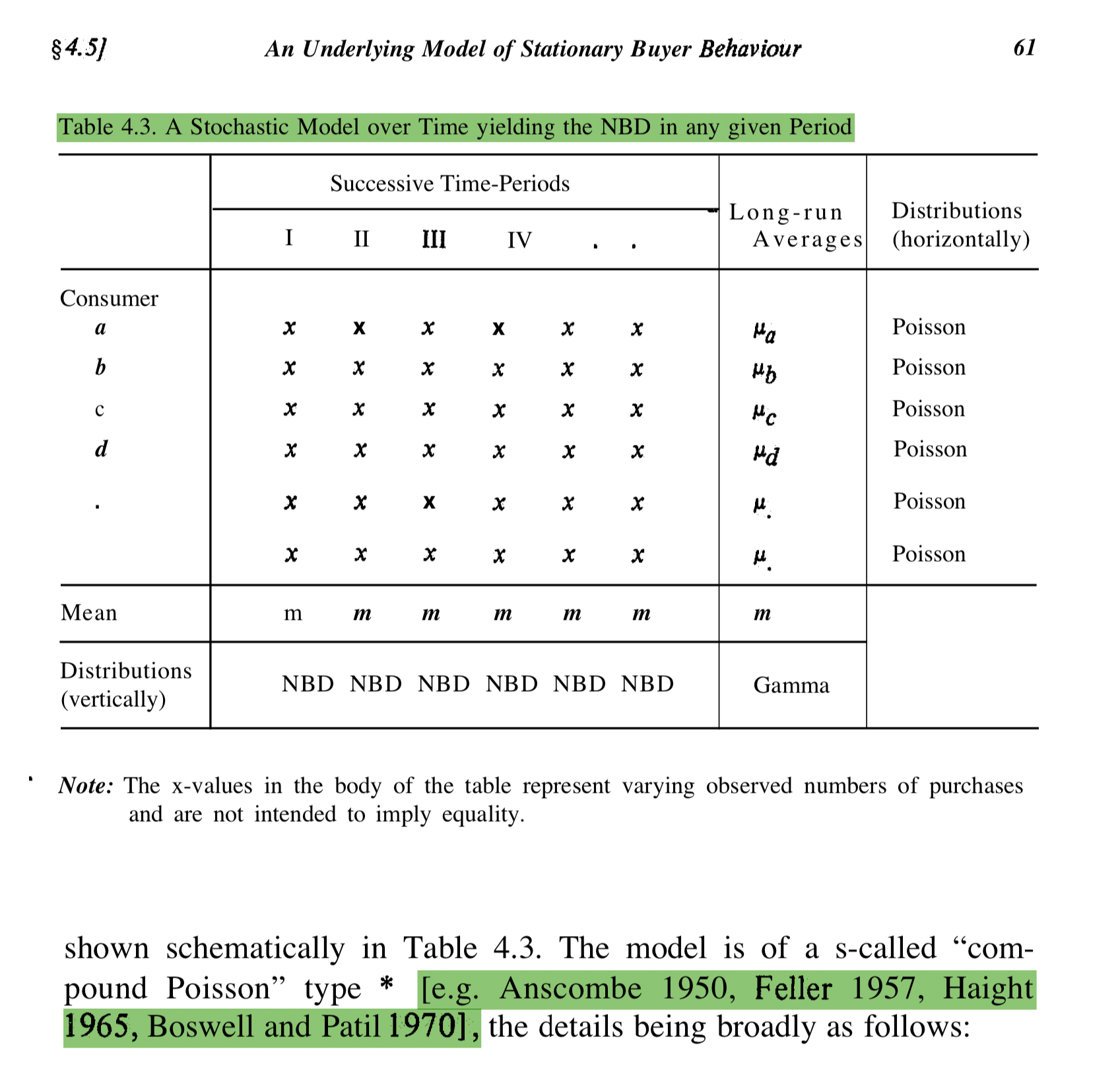
Introduces Ehrenberg's paper "Repeat-Buying," explaining why a gamma distribution models purchase frequency and how it leads to the negative binomial distribution.