[Marketing] Generalized Bass Model: Diffusion Prediction Considering Marketing MixJan. 4, 2024
Explains the Generalized Bass Model (GBM), incorporating advertising and price cuts into new product diffusion forecasting, with Python simulations.
This section covers the theory and Python implementation behind a wide range of math and algorithm topics, including recommender systems, graph theory, linear algebra, quantum computing, and marketing statistics models.
[2026-05-01] : Removed several outdated articles.
Explains the Generalized Bass Model (GBM), incorporating advertising and price cuts into new product diffusion forecasting, with Python simulations.
Explains the Gumbel distribution, a core concept in extreme value statistics, with Python-based parameter estimation, visualization, and the Gumbel-Max Trick.
Explains the theoretical background of the Bass Diffusion Model for predicting new product adoption, with Python simulations and fitting to sample data.
Compares the Bass Model for new product diffusion with the SIR model for infectious disease spread, explaining their mathematical similarities and differences.

Organizes the theoretical correspondence between the vector field operator div·grad = Δ and the Laplacian matrix in graph theory, as a personal reference note.
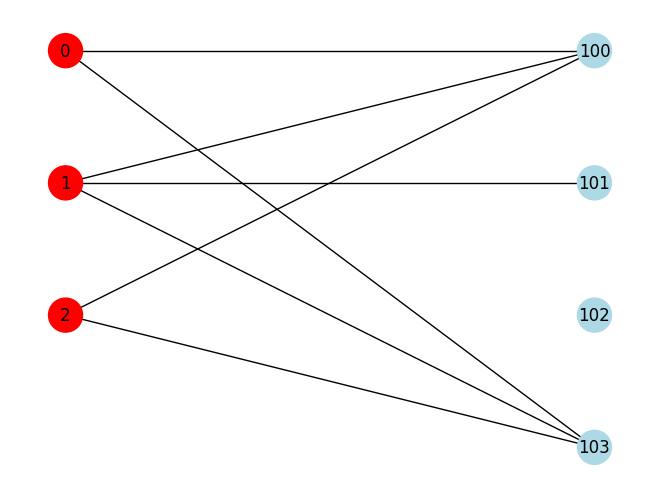
Explains the rating matrix, adjacency matrix, degree matrix, and Laplacian matrix used in recommender systems, computing them with Python's Networkx library.
Explains association analysis with Apriori and FP-Growth via mlxtend, covering support, confidence, and lift metrics, applied to a Kaggle grocery dataset.
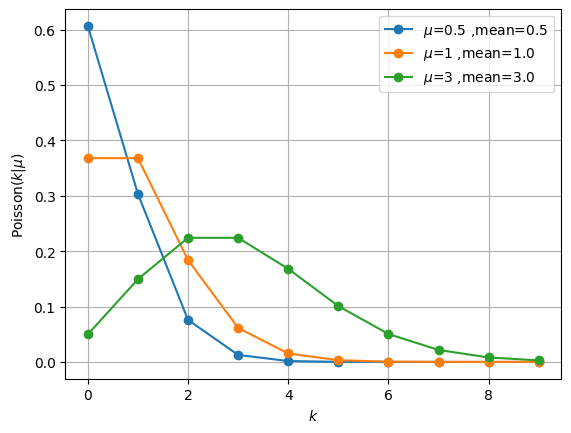
Introduces RFM analysis and demonstrates generating dummy purchase data with Faker and Poisson/Gamma distributions, stored in SQLite via Python's sqlite3 module.

Explains the definition and properties of doubly stochastic matrices and their applications in machine learning and recommender systems, with a Python example.
Explains the theory of low-pass filters in graph signal processing based on eigenvalue decomposition and eigenvectors, with a Python implementation.
Explains the theory of the graph Laplacian and its eigenvalues, introduces the Graph Fourier Transform (GFT), and its Python implementation.
Explains the Neumann series, its convergence condition, and how it approximates matrix inverses like (I - aA)^{-1}, with a Python implementation example.
Derives the spectral decomposition of symmetric matrices from eigenvalues and eigenvectors, relates it to SVD, and gives a Python implementation example.
Compiles useful matrix formulas from the Matrix Cookbook covering transpose, trace, determinant, differentiation, and the Woodbury inversion identity.
Explains matrix cofactors and cofactor expansion with worked examples, and implements determinant calculation via cofactors in Python.
Summarizes the basic theory and Python implementation of GNNs (Graph Neural Networks) and GCNs (Graph Convolutional Networks), a specific type of GNN.
Explains the relationship between spatial convolution and frequency-domain element-wise multiplication in graph signal processing, with theory and Python examples for GNNs.
Explains five matrix decompositions—Cholesky, LU, QR, spectral, and singular value decomposition—with theory and Python implementation examples.

Explains properties of the Rayleigh quotient for symmetric matrices, proves its max/min via Lagrange multipliers, with a Python example.
Explains SVD and PCA fundamentals with NumPy code examples, and how SVD enables low-rank approximation for recommender system rating matrices.
Explains the definition and computation of the pseudo-inverse for matrices that lack a true inverse due to rank deficiency, with a Python example.
Explains singular value decomposition with a recommender system's user-item matrix, and how low-rank approximation predicts user preferences.
Reviews the classical conjugate gradient method for solving linear equations, then studies qiskit's HHL algorithm for quantum linear system solving.
Explains Grover's algorithm, which searches unsorted data in O(√N) time, describing amplitude amplification theory as a rotation operation in vector space.
Reviews how RSA cryptography works, then explains Shor's algorithm, which could break RSA by using order-finding to perform prime factorization on a quantum computer.
Explains the theory of quantum phase estimation, combining phase kickback with the inverse quantum Fourier transform, then implements it in qiskit using a T-gate example.
Reviews the classical discrete Fourier transform and then applies the same idea to quantum states, explaining the theory of the quantum Fourier transform with qiskit.
Explains Simon's algorithm, which determines whether a function is one-to-one or two-to-one and finds the period of a two-to-one function, following the math step by step.
Explains the Deutsch-Jozsa algorithm, which determines with a single query whether a function is constant or balanced, following the underlying math step by step.
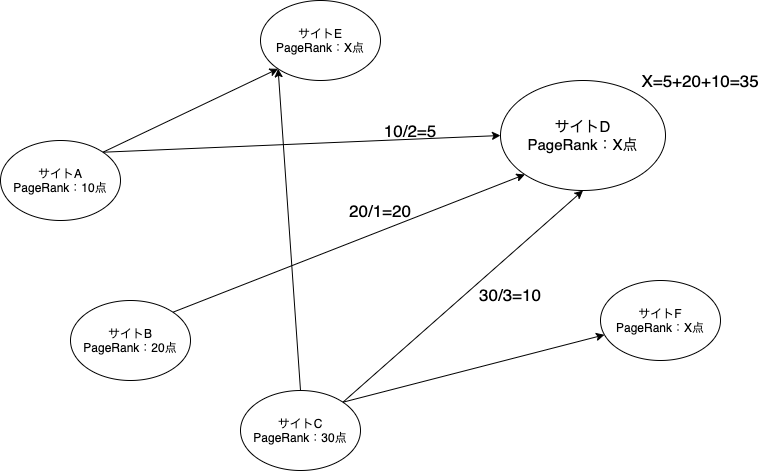
A personal summary of PageRank and the Google matrix, based on a reference textbook, covering the underlying theory and key mathematical formulas.
Explains how to represent two-qubit and three-qubit states using the tensor product, and covers the basics of multi-qubit gate operations in qiskit.

An introductory article on qiskit's basic syntax, creating quantum registers, and single-qubit operations such as the Hadamard and CNOT gates.
Explains the mathematical background and algorithms of DeepWalk and Node2Vec, random-walk graph embedding methods, with Python examples.
Explains classical random walks and adjacency matrices, focusing on PageRank and Personalized PageRank, with formulas and Python code examples.
Explains evaluation methods for recommender systems, from accuracy metrics like precision and recall to offline and online evaluation, with Python examples.
Explains the formulation and optimization problem of matrix factorization in recommender systems, with an SVD implementation using movielens-100k.
Explains content-based filtering and how cosine similarity between feature vectors drives recommendations, with a Python example.
Explains user-based and item-based memory-based collaborative filtering via cosine similarity and Pearson correlation, with a Python example.

Introduces the Surprise Python library for building recommender systems, covering its features and a matrix-factorization implementation example.
Explains how to use the implicit recommender library, covering the ALS and BPR algorithms with a movielens-100k dataset example.