[Marketing] Generalized Bass Model: Diffusion Prediction Considering Marketing Mix
Explains the Generalized Bass Model (GBM), incorporating advertising and price cuts into new product diffusion forecasting, with Python simulations.
Linear algebra, probability, and statistics through definitions and computation.
Explains the Generalized Bass Model (GBM), incorporating advertising and price cuts into new product diffusion forecasting, with Python simulations.
Explains the Gumbel distribution, a core concept in extreme value statistics, with Python-based parameter estimation, visualization, and the Gumbel-Max Trick.
Explains the theoretical background of the Bass Diffusion Model for predicting new product adoption, with Python simulations and fitting to sample data.
Compares the Bass Model for new product diffusion with the SIR model for infectious disease spread, explaining their mathematical similarities and differences.
Mathematics Graphs and recommendation
Organizes the theoretical correspondence between the vector field operator div·grad = Δ and the Laplacian matrix in graph theory, as a personal reference note.
Mathematics Numerical computing
Uses SymPy to symbolically derive the binomial-to-Poisson distribution limit and perform maximum likelihood estimation with Fisher information for the normal distribution.

Mathematics Numerical computing
Introduces the basics of SymPy, covering symbolic expansion, factorization, equation solving, differentiation, integration, and matrix operations with simple examples.
Mathematics Graphs and recommendation
Explains the theory of low-pass filters in graph signal processing based on eigenvalue decomposition and eigenvectors, with a Python implementation.
Mathematics Graphs and recommendation
Explains the theory of the graph Laplacian and its eigenvalues, introduces the Graph Fourier Transform (GFT), and its Python implementation.
Mathematics Numerical computing
Explains five matrix decompositions—Cholesky, LU, QR, spectral, and singular value decomposition—with theory and Python implementation examples.
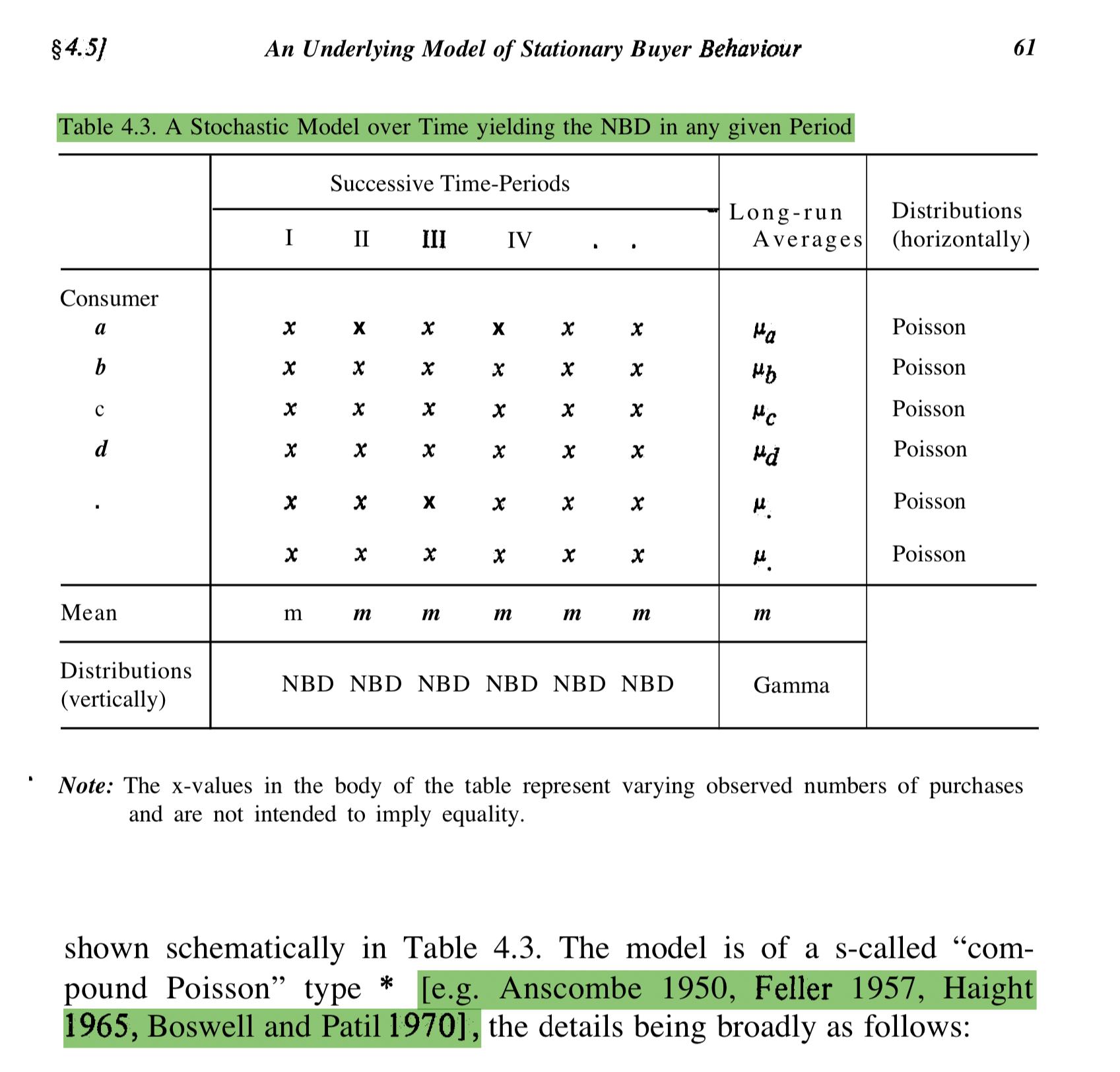
Introduces Ehrenberg's paper "Repeat-Buying," explaining why a gamma distribution models purchase frequency and how it leads to the negative binomial distribution.
Introduces six analytics tools from "Strategic Theory of Probability Thinking" and implements the Gamma-Poisson recency model in Python using scipy's curve_fit.
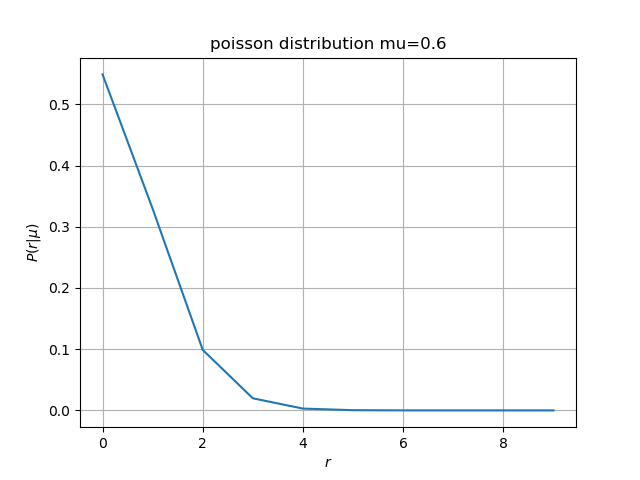
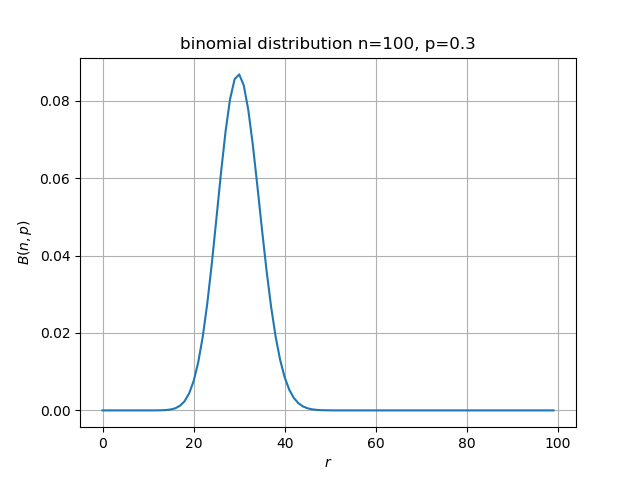
Explains the binomial and Poisson distributions in "Strategic Theory of Probability Thinking," used to model consumer preference, with Python code examples.